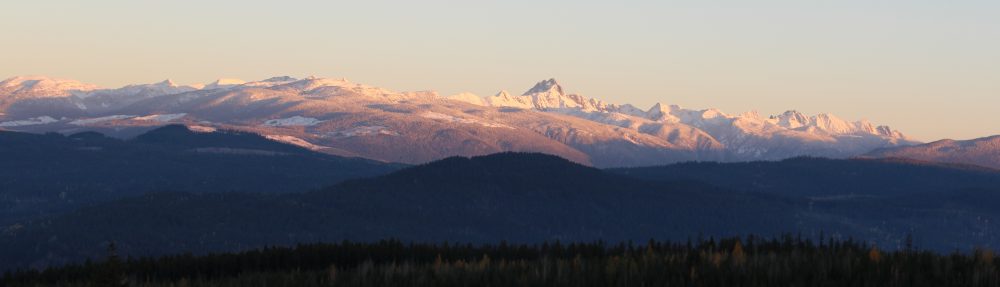
Our operational plans, including the Forest Stewardship Plan and Management Plan, guide our primary forest activities such as timber harvesting, silviculture treatments, wildlife habitat enhancement, and road construction, maintenance, or deactivation. We invite you to explore this page to learn more about our operational plans.
As a forest licensee, the Lower North Thompson Community Forest Society (LNTCFS) is dedicated to responsibly developing forest areas for harvest. This process begins with thorough planning and development, which involves collecting data on forest attributes, conducting site assessments, and laying out boundaries for cutblocks and roads.
Once a site is prepared, harvesting can commence. During this phase, LNTCFS staff oversee all harvesting activities, including applying for cutting permits and selecting and supervising contractors. Most of the trees harvested from our tenure area (license K1Z) are processed into logs and sold to various mills in the region, including Interfor, Tolko, Gilbert Smith, and WoodCo. We also bring some logs back to our own mill yard to be transformed into value-added forest products such as dimensional lumber and firewood.
After harvesting, we are committed to reforesting harvested areas and nurturing these young forests until they become established and no longer require active management. This milestone is known as the “free to grow” stage. Until then, the LNTCFS is responsible for essential stand-tending activities, which may include fill-planting, brushing, thinning, and fertilization.

A Forest Stewardship Plan (FSP) is required by the Government of BC under the Forest and Range Practices Act (FRPA) for a forest licensee to conduct development activities on Crown land. Additionally, it details the results, strategies, and measures the licensee will implement to meet government objectives for 11 resource values, including soil, timber, wildlife, fish, water, biodiversity, cultural heritage resources, resource features, recreation resources, visual quality, forage, and associated plant communities. Once an FSP is approved, the government may issue a cutting permit which allows a forest licensee to harvest timber and/or construct roads, ensuring that all activities align with sustainable forest management practices. An approved FSP is valid for five years.
We have begun utilizing Forest Operations Maps (FOMs), which provide a detailed visual representation of planned harvest activities, including road locations along with cutblock locations, sizes, and shapes. These maps are essential for ensuring compliance with new policy directions and allow for effective communication with stakeholders and the general public.
The LNTCFS Forest Stewardship Plan 837 was approved in 2021.
Here is a link to the plan: LNTCFS Forest Stewardship Plan (2021-2026) and Map.
For more information on FSPs, check out the Ministry of Forests web page.
For more information on the FRPA, check out the Forest Practices Board’s Guide to the Forest and Range Practices Act.
For more information of FOMs, check out the Ministry of Forests web page.
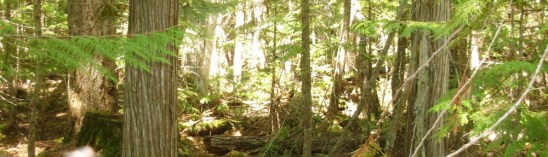
The Forest Act requires that a management plan be prepared for all timber being developed on crown land. The Community Forest Agreement K1Z license document and the Forest and Range Practices Act are the basis for its content. Approval of the management plan represents approval in principle of management’s intent but it does not give authority to proceed with specific operational activities.
The Management plan provides a statement of the Community Forest’s objectives for resource management. It also outlines the strategies that will be used to meet these objectives.
The objectives of the LNTCFS are to manage and protect the following forest resources:
-
- timber,
- water and riparian areas,
- fish and wildlife,
- recreation,
- visuals,
- cultural heritage resources and archaeological sites,
- botanical forest products, and
- range.
The LNTCFS has completed our second Management Plan (MP) for the Community Forest. This plan is now approved and in effect as of January 1, 2016.
Forest Safety
The LNTCFS is SAFE Certified through the BC Forest Safety Council. By having a safety management system in place, incidents and injuries are reduced, and we improve the performance of an organization as a whole.
 Lower North Thompson Community Forest Society